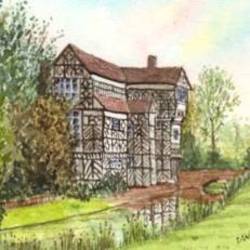
The Great Tudor Houses...
by Mags of Mags-nificent Miniatures...
THE KITCHENS:
The kitchens were made up of several rooms and larders.
Flesh Larder: Meat and poultry would be hung from the ceilings. Wet Larder: fish, fresh, dried or pickled, would be stored here.
Dry Larder: Store for tubs and barrels of almonds, spices etc.
The Pantry: This was where the bread would be kept stored either in a lidded ‘ark’ or in a cart suspended from the ceiling, this protected the bread from the vermin.
The Pastry: This is where the pies and breads were baked in the ovens.
The Dairy: Butter and cheese was made here.
The Buttery: You might think that this is where the butter was made but no, this was where the ale and wine was stored. (The name came from ‘butt’ which meant barrel)
The Brew House: This is where the ale was brewed from barley and hops.
The Scullery: This is where all the washing up was done.
Kitchen Cookware: Kettles, skillets, cauldrons, pestle & mortars were all commonly used cooking methods: spit roasting, baking, frying, boiling, salting and smoking. Much of the cooking was performed over open flames or fires. In the kitchens there would be a big fireplace and a brick oven. Metal baskets filled with charcoal were stood on iron frames above the heat. Many types of sauce were stirred over these ovens.
The Food...
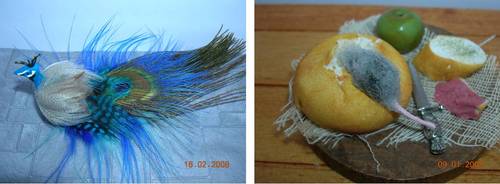
The Food...
Meat, Fish, Poultry:
Fresh beef and mutton were only eaten in the autumn when the animals were slaughtered. Then some would be stored for the winter months.Fruit:
This was only eaten in season due to no refrigeration, transport etc.During the autumn they would eat apples, pears, plums and cherries. Apples were stored to last through the winter.
Some fruits were kept in a syrup of wine, sugar and spice.Fish:
Fish was eaten on ‘Fish days’, Fridays and Saturdays and forty days prior to Easter – this was a law imposed by the Catholic Church.The rich ate bread made from fine white flour, this was called Manchet.
Article & photographs by Mags of Mags-nificent Miniatures... Copyright 2008
Water colour (Below) by Dave Williams of Dolls House Paintings... Copyright 2008